In This Article
- Are You Ready for Your PADI Instructor Development Course?
- Don’t Try to Learn Everything the Night Before
- Understand the PADI Standards
- Get Back in the Water Before Your IDC
- Practise Teaching, Not Just Diving
- Check Your Diving Equipment Before the Course
- Prepare Your Body as Well as Your Mind
- Don’t Be Afraid of Making Mistakes
- Don’t Compare Yourself to Other Candidates
- Get Your Life Organised Before the IDC
- Give Yourself a Break
- Becoming a PADI Instructor Is About More Than Passing an Exam
- My Advice Before Your IDC
- About Seaworld PADI CDC
Are You Ready for Your PADI Instructor Development Course?
Your PADI Instructor Development Course is about to begin. Are you ready?
Our next PADI Instructor Development Course (IDC) starts on 1 October at Seaworld PADI Career Development Center (CDC).
After 15 years of conducting PADI IDCs, I have learned that every instructor candidate arrives with a different story.
Some candidates arrive confident and excited. Others arrive nervous and wondering if they are really ready. Some are strong in dive theory, while others feel completely comfortable underwater but become nervous the moment they have to stand in front of a group and teach.
And that’s perfectly normal.
You don’t need to arrive at your IDC as a perfect instructor.
That’s what the IDC is for.
What you do need is the right attitude, a willingness to learn, and enough preparation to allow you to get the most from the course.
So, before we meet at Seaworld PADI CDC, I’d like to share some advice based on 15 years of watching instructor candidates prepare for, experience and complete their IDCs.
Don’t Try to Learn Everything the Night Before
If there is one piece of advice I would give every IDC candidate, this would be it.
Don’t leave everything until the last minute.
It’s very easy to panic before an IDC and start thinking that you need to memorise every standard, every detail of dive theory and every page of your course materials before you arrive.
You don’t.
Of course, you should prepare. Review your PADI standards, refresh your dive theory and become familiar with your IDC materials. If you already know that there are particular subjects where you need more work, spend some extra time on those areas.
But don’t spend every night studying until midnight.
An IDC requires concentration. You will be learning, practising, teaching, receiving feedback and doing it all again. You’ll get much more from the course if you arrive with a fresh mind.
So study.
But also sleep.
Your brain needs the rest.
Understand the PADI Standards
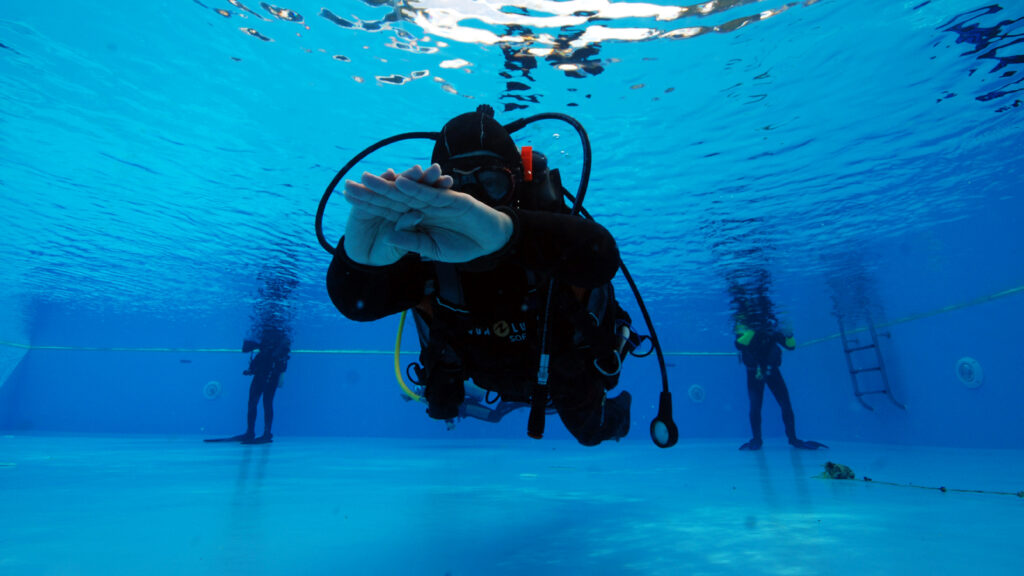
Before your IDC starts, spend some time with your PADI Instructor Manual and standards.
But don’t simply try to memorise them.
Try to understand them.
As a PADI Instructor, you need to know what the standards are. But you also need to understand how those standards apply when you’re actually teaching a student.
That’s where the real transition from diver to instructor begins.
A standard might look simple on a page. In the real world, however, you’ll have a student in front of you with a particular level of experience, confidence and ability.
Your job as an instructor is to apply your knowledge correctly while keeping the student safe and helping them learn.
During the IDC, we’ll work on turning your theoretical knowledge into practical teaching skills.
Get Back in the Water Before Your IDC
If you haven’t been diving recently, go diving.
It doesn’t have to be a big dive trip. Even a short session in the pool can be valuable.
Spend some time becoming comfortable with your equipment again. Pay attention to your buoyancy, trim, body position and movement in the water.
Refresh your basic skills.
Practise your demonstrations.
And don’t forget your rescue skills.
There is an important difference between performing a skill for yourself and demonstrating it as an instructor.
As an instructor candidate, you need to demonstrate a skill while thinking about the student watching you.
Can they see what you’re doing?
Is your demonstration clear?
Are you positioned correctly?
What happens if your student doesn’t understand?
What happens if something goes wrong?
The more comfortable you are with your own diving skills, the more attention you can give to your students.
That’s why getting in the water before your IDC can make such a difference.
Practise Teaching, Not Just Diving
Being an excellent diver doesn’t automatically make you an excellent instructor.
I’ve seen many experienced divers arrive at an IDC with fantastic diving skills but discover that explaining a simple skill to a beginner is much harder than they expected.
The good news is that you can practise this before your IDC.
Choose a diving skill or topic and explain it out loud as if you’re teaching someone who has never dived before.
Don’t worry about sounding perfect.
Instead, listen to yourself.
Are your explanations clear?
Are you using language your student will understand?
Are you giving too much information?
Are you making something simple unnecessarily complicated?
Most importantly, ask yourself:
“If I were the student, would I understand what my instructor just explained?”
That’s the question that matters.
Your students don’t need you to impress them with how much you know.
They need you to make diving clear, simple and understandable.
After 15 years of conducting IDCs, I believe this is one of the biggest differences between being a knowledgeable diver and becoming an effective instructor.
Check Your Diving Equipment Before the Course
Don’t wait until the first day of your IDC to discover that something isn’t working.
Take the time to check your equipment before you arrive.
Make sure your regulator, BCD, mask, fins, exposure protection and dive computer are ready.
Check your compass, SMB or DSMB, reel, slate or wetnotes and any other equipment you’ll need during the course.
If something needs servicing, do it now.
If something needs replacing, replace it now.
The IDC is demanding enough without discovering halfway through the course that your equipment has a problem.
Your equipment doesn’t need to be new or expensive.
It simply needs to be reliable, familiar and ready to use.
Prepare Your Body as Well as Your Mind
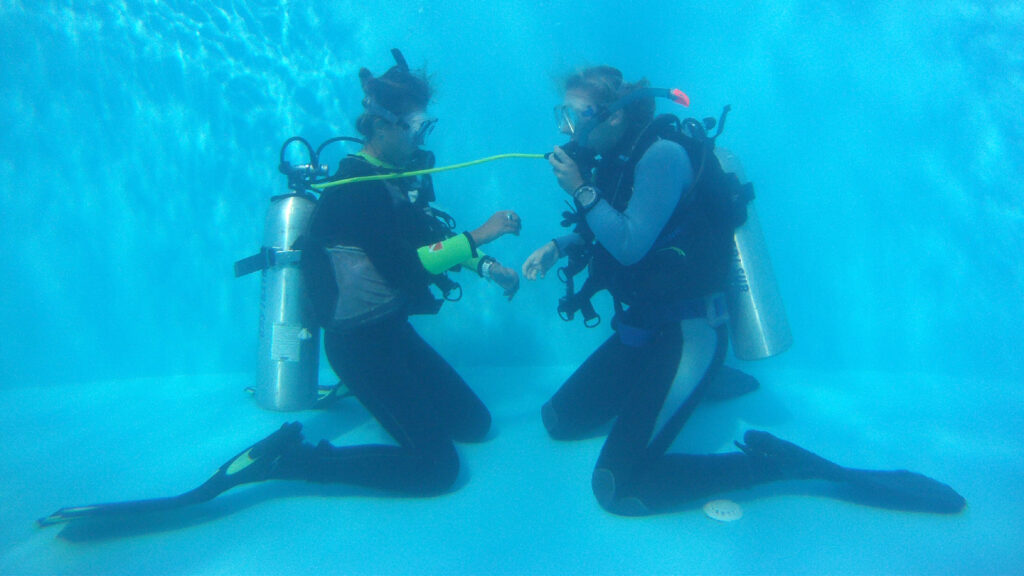
An IDC can be physically and mentally demanding.
There can be long days, diving, swimming, repeated skill demonstrations and plenty of concentration.
By the end of some days, you may feel that your brain has done more work than your body.
That’s why your preparation should start before the course.
Get enough sleep.
Drink plenty of water.
Eat properly.
Give your body time to recover.
And please don’t decide a few days before the IDC that you’re going to start an extreme fitness programme.
You don’t need to become an Olympic athlete before your IDC!
Simply arrive healthy, rested and ready to participate.
Don’t Be Afraid of Making Mistakes
This is something I talk about with almost every group of IDC candidates.
You will make mistakes.
And that’s OK.
You might forget something during a presentation.
You might demonstrate a skill incorrectly.
You might get a theory question wrong.
You might finish a teaching presentation and immediately realise that you could have explained something better.
It happens.
The IDC is the place where you can make mistakes, receive feedback, correct them and try again.
Don’t take constructive feedback personally.
Listen to it.
Think about it.
Use it.
One of the most valuable things you can take away from an IDC isn’t simply the information you learn. It’s learning how to recognise your weaknesses and improve them.
That’s a skill you’ll use throughout your entire career as an instructor.
Don’t Compare Yourself to Other Candidates
Every IDC brings together people with different diving backgrounds.
One candidate may have thousands of dives.
Another may be an excellent public speaker.
Someone else may have exceptional diving skills.
It’s easy to look around the room and think that everyone else is better prepared than you.
Don’t fall into that trap.
Your journey is your journey.
Instead of comparing yourself with another candidate, compare yourself with where you were yesterday.
Are you becoming more confident?
Are you explaining things more clearly?
Do you understand the standards better?
Are your skill demonstrations improving?
That’s the progress that matters.
And remember that the other candidates aren’t your competition.
They can become one of your greatest resources.
Practise together.
Ask questions.
Give each other constructive feedback.
Help each other.
You’ll all be going through the same experience, and some of the relationships you build during your IDC may continue long after the course has finished.
Get Your Life Organised Before the IDC
Once your IDC begins, it’s going to take a lot of your attention.
So, before the course starts, try to take care of the things that might distract you.
Organise your work and personal commitments.
Prepare your meals if necessary.
Check your transportation.
Get your diving equipment ready.
Organise your study materials.
Try to establish a good sleeping routine.
These things might sound insignificant, but they make a difference.
The fewer unnecessary things you have to worry about during your IDC, the more energy you can put into learning how to become an instructor.
Give Yourself a Break
It’s very easy to put too much pressure on yourself before an IDC.
You may find yourself thinking:
“I need to know everything.”
“I can’t make mistakes.”
“I have to pass.”
I understand that feeling.
Becoming a PADI Instructor is an important step, and naturally you want to do your best.
But try to approach your IDC with a different mindset.
Come ready to learn.
Come ready to listen.
Come ready to practise.
Come ready to receive feedback.
And, most importantly, come ready to enjoy the experience.
Becoming a PADI Instructor Is About More Than Passing an Exam
After 15 years of conducting PADI IDCs, one of the things I enjoy most is watching the transformation that happens during the course.
I’ve seen nervous candidates become confident instructors.
I’ve seen people struggle with a skill on the first day and master it a few days later.
I’ve seen candidates discover abilities they didn’t realise they had.
That’s one of the most rewarding parts of being a Course Director.
The IDC is challenging, but it should also be exciting.
You’re starting a new chapter in your diving career.
You’re moving from being someone who enjoys diving to becoming someone who can teach others to enjoy diving safely and confidently.
That’s a big responsibility.
But it’s also a fantastic opportunity.
My Advice Before Your IDC
So, as 1 October gets closer, don’t make your preparation more complicated than it needs to be.
Review your standards.
Refresh your dive theory.
Get in the water.
Practise your skills.
Practise explaining things.
Check your equipment.
Get some sleep.
Look after yourself.
And don’t spend the final days worrying about whether you’re good enough.
Come ready to learn, and we’ll work on the rest together.
After 15 years of running PADI IDCs, I can tell you that you don’t need to arrive at the start of the course as the finished product.
You just need to arrive with the right attitude and a genuine desire to become a better instructor.
The rest is part of the journey.
I’ll see you at Seaworld PADI CDC.
Let’s get started.
— Your PADI Course Director
15 years of experience conducting PADI Instructor Development Courses
About Seaworld PADI CDC
Seaworld PADI Career Development Center (CDC) provides professional-level PADI training for divers who want to develop a career in the diving industry.
Our PADI Instructor Development Courses are designed to help experienced divers develop the knowledge, diving skills and teaching techniques needed to become confident PADI Professionals.
If becoming a PADI Instructor is the next step in your diving career, contact the Seaworld PADI CDC team to learn more about our upcoming IDCs and how to prepare for your instructor journey.