
In This Article
- You’re a PADI Instructor. Now What?
- 1. Go Back to Your IDC Materials
- 2. Remember Your Own Open Water Course
- 3. Check What Your Students Have Already Learned
- 4. Plan Your Confined Water Sessions Before You Get Wet
- 5. Understand the Goal of the Open Water Diver Course
- 6. Teach Scuba Diving, Not Just a List of Skills
- 7. Expect the Unexpected
- 8. Leave Yourself a Margin of Error
- 9. Make Safety Your Priority, but Don’t Forget the Fun
- 10. Start Small, Learn From Every Course
- 11. Remember That Your Students Are at the Beginning of Their Diving Journey
- Final Thoughts: Enjoy Your First Open Water Course!
How to Teach Your First PADI Open Water Course: Advice for New Instructors
You’ve passed your Instructor Examination, finished your IDC, and landed your first job as a scuba instructor. Now comes the exciting part: teaching your first PADI Open Water Diver course. Here’s some friendly advice from a Course Director with more than 15 years of scuba teaching experience.
You’re a PADI Instructor. Now What?
Congratulations! You’ve passed your IE, completed your IDC, and earned your place among PADI Professionals. Your career as a scuba instructor is about to begin.
Perhaps you already have some experience teaching Discover Scuba Diving programs. Maybe you’ve assisted with a few courses, worked as a Divemaster, or spent the last few months imagining what your life as an instructor will look like.
Then the moment arrives.
You’re standing in front of your first Open Water Diver students, ready to teach them how to dive. Suddenly, all those skills you practised during your IDC might feel a little different.
Where do you start? How should you organise your sessions? What if a student struggles with a skill you thought was easy? And how do you make sure everyone learns, stays safe, and actually enjoys the experience?
First of all, take a breath.
Every instructor has been in your position. Some of us probably don’t remember those first nervous moments very clearly anymore, but we’ve all had to start somewhere.
After teaching another IDC and working with a new generation of instructors, I thought I’d share a few lessons and practical tips that might make your first Open Water courses a little easier.
1. Go Back to Your IDC Materials
During your IDC, you probably gave a presentation on how to organise and teach the Open Water Diver course. You may remember it clearly, or you may have forgotten most of it while preparing for your IE!
Either way, go back and review it.
Your IDC gave you a foundation for teaching. Now it’s time to put that knowledge into practice, adapting it to real students and real teaching conditions.
Review your PADI Open Water Diver Instructor materials, the relevant Standards and Procedures, and the current course requirements. Use your teaching slates, cue cards, and other approved resources to refresh your memory and organise your sessions.
Pay particular attention to the standards for each skill, the performance requirements, student supervision, and the conditions under which training can take place.
Don’t rely on what you remember from your IDC alone. Standards can change, and it’s your responsibility to ensure that your teaching follows the current requirements.
A good instructor prepares before entering the water. You don’t need to memorise every sentence in every manual, but you do need to know where to find the information you need.
2. Remember Your Own Open Water Course
Think back to your first scuba diving course.
What do you remember about it? Was your instructor patient? Did you feel comfortable asking questions? Were the explanations clear? Did you have enough time to practise? Was there something that made you nervous?
If your experience was positive, think about what made it so good. Those are lessons worth carrying into your own teaching.
If something could have been better, learn from that, too.
Your students will arrive with different personalities, expectations, fears, and learning styles. Some will be confident in the water but struggle with equipment. Others will understand the theory perfectly but feel uncomfortable putting their faces underwater.
Your job is not to make every student learn in exactly the same way. It’s to help each person progress towards the course requirements safely and confidently.
3. Check What Your Students Have Already Learned
Before your first session, find out where your students are in their learning.
Check their eLearning progress, knowledge development, and any outstanding requirements. Find out whether they have completed the necessary sections and whether they have questions or topics they would like to review.
Don’t assume that because a student has completed their eLearning, they understand everything perfectly.
Equally, don’t assume that they know nothing.
A quick conversation before training can tell you a lot. Ask about previous experience in the water, comfort with swimming, expectations for the course, and any concerns they may have.
This will help you identify where you might need to spend extra time and allow you to prepare a more effective training plan.
Remember, your students are not IDC candidates. They haven’t spent days practising skills, analysing demonstrations, and discussing teaching techniques. They are beginners learning an entirely new activity.
Keep your explanations clear, relevant, and appropriate for their level.
4. Plan Your Confined Water Sessions Before You Get Wet
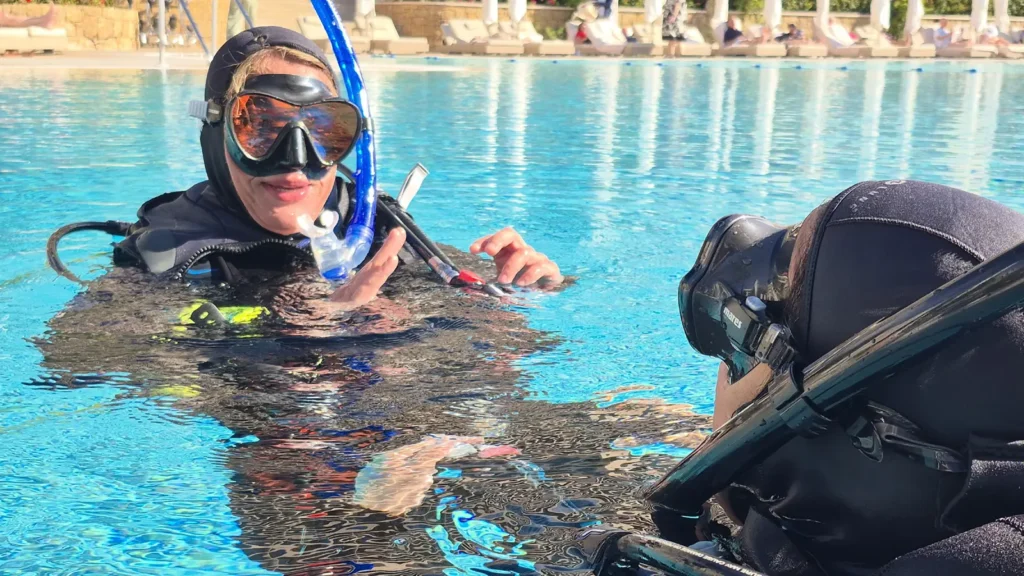
This is one of the most important pieces of advice I can give you: plan your confined water sessions in advance.
Before the course begins, sit down with a clean sheet of paper and map out how you intend to conduct each session.
Review the required skills and decide how to organise them in a logical sequence. Consider your teaching environment, water conditions, available equipment, student numbers, and the time you have available.
Think about where you will conduct each skill and how you will move students from one exercise to the next.
Will you have a suitable place for skills that require students to stand comfortably? Where will you conduct buoyancy exercises? How will you position yourself to observe everyone? Is the training area appropriate for the exercises you have planned?
Make sure your plan follows current PADI standards and allows you to meet every required performance objective.
And here’s another important tip: allow more time than you think you’ll need.
Students may struggle with mask clearing, buoyancy, regulator recovery, or simply getting comfortable underwater. You may need to repeat an explanation, demonstrate a skill again, or give someone a little extra time to relax.
That is normal.
A realistic plan gives you room to adapt without feeling pressured to rush through the session just because the clock is ticking.
5. Understand the Goal of the Open Water Diver Course
When you begin teaching, it’s easy to focus on the skills themselves.
You have a list of exercises to complete, and you want to make sure every student performs them correctly. Naturally, you want to do a good job and demonstrate that you know your stuff.
But don’t lose sight of the bigger picture.
The Open Water Diver course is an entry-level certification course. Its purpose is to help students develop the knowledge, skills, and judgement needed to dive within the limits of their training, experience, and certification.
By the end of the course, students should be able to use their scuba equipment appropriately, apply essential safety procedures, and demonstrate the required skills in accordance with PADI standards.
They are not expected to be Divemasters. They are not expected to know everything about scuba diving. And they certainly aren’t expected to perform like experienced divers after a few training sessions.
Your responsibility is to help them build a solid foundation.
Teach them what they need to know at this stage, make sure they meet the required performance standards, and help them understand how to apply what they learn.
There will be plenty of time for more advanced skills and knowledge in future courses.
6. Teach Scuba Diving, Not Just a List of Skills
This is closely related to the previous point, but it’s worth emphasising.
You are teaching scuba diving, not simply teaching a collection of individual skills.
Of course, your students need to learn how to clear their masks, recover their regulators, control their buoyancy, and respond appropriately to common problems. These skills are essential.
However, they also need to understand why they are learning them and how they fit into the overall diving experience.
Connect your explanations to situations they can understand. Explain how good buoyancy helps protect the underwater environment, how monitoring air consumption contributes to dive planning, and why communication with a buddy matters.
Keep the information relevant to their training level. Avoid overwhelming beginners with details that belong in professional-level training or more advanced courses.
It’s tempting, especially when you have just completed an IDC, to show how much you know. You may be excited about all the techniques, procedures, and theory you’ve learned.
That’s great! Keep that enthusiasm.
But remember that effective teaching isn’t about demonstrating how much the instructor knows. It’s about helping the student learn what they need.
Sometimes, the best explanation is the simplest one.
7. Expect the Unexpected
You can prepare the perfect lesson plan, practise your demonstrations, and organise your equipment down to the last detail.
Then your first student will do something you never expected.
A student may forget a skill you have just demonstrated. Another might become nervous for no obvious reason. Someone may struggle with an exercise that seemed incredibly easy during your IDC, while another student completes it almost immediately.
Welcome to teaching!
Real students will surprise you. Their reactions, questions, and difficulties may be very different from those of your fellow IDC candidates.
This doesn’t mean you’ve done something wrong. It means that people learn differently, and teaching requires flexibility.
Stay patient. Observe what is happening. If necessary, stop, reassess the situation, and adjust your approach while maintaining the required standards.
If a student is uncomfortable or struggling, don’t rush them simply because you want to stay on schedule. Give them the appropriate support, practise within safe limits, and seek guidance when needed.
You are not expected to have an instant answer to every possible situation. You are expected to recognise your limits, make responsible decisions, and put student safety first.
8. Leave Yourself a Margin of Error
New instructors often underestimate how much time and attention a course requires.
You may plan to finish a session in two hours, but equipment preparation, briefings, student questions, skill practice, and changing conditions can easily affect your schedule.
Avoid planning every minute so tightly that one small delay creates a problem.
Leave room for repetition, additional explanations, equipment adjustments, and unexpected challenges.
The same applies to your own workload. Make sure you have time to prepare properly before each session, check the equipment, review the site conditions, and think through your plan.
Don’t be afraid to ask a more experienced instructor or Course Director for advice. If you are uncertain about a standard, a teaching decision, or whether a particular environment is suitable, get the right guidance before proceeding.
Good instructors are not those who never need help. They are those who recognise when they need it.
9. Make Safety Your Priority, but Don’t Forget the Fun
Scuba diving involves real risks, and your responsibility as an instructor is to manage those risks appropriately.
Follow the current PADI standards, conduct suitable briefings, assess environmental conditions, check equipment, maintain appropriate supervision, and make sure students are ready before progressing.
Never allow the schedule, customer expectations, or your desire to finish the course to compromise safety or training quality.
At the same time, don’t let the course become nothing more than a series of emergency procedures and things that could go wrong.
Your students have come to learn scuba diving because they want to experience something exciting. They want to explore a new environment, discover marine life, and enjoy being underwater.
Give them opportunities to experience that excitement within the limits of their training and the conditions.
Celebrate their progress. Notice when someone becomes more relaxed in the water. Give positive, specific feedback when they improve. Help them understand not only what they need to correct, but also what they are already doing well.
A student who feels supported and enjoys the learning process is more likely to develop confidence and a lasting interest in diving.
Safety and fun are not opposites. Good instruction brings them together.
10. Start Small, Learn From Every Course
If possible, start by teaching one student at a time or working with a small group while you build your experience.
Teaching one-on-one allows you to focus on the student’s needs, practise your teaching techniques, and learn how to recognise and respond to different challenges.
You can pay closer attention to individual progress and become more comfortable managing a complete course from the first briefing to the final open water dive.
Of course, always follow the applicable standards and your employer’s procedures for student numbers and supervision.
After each session, take a few minutes to reflect.
Ask yourself:
- What went well today?
- Which skills required more time than expected?
- Were my explanations clear?
- Did I organise the session efficiently?
- Was every student appropriately supported?
- What would I change next time?
You don’t need to get everything perfect on your first attempt. You do need to learn from the experience.
With every course, you will become better at planning, recognising potential difficulties, adapting your teaching, and managing your time.
Experience is built one student and one course at a time.
11. Remember That Your Students Are at the Beginning of Their Diving Journey
Your students are learning the foundations of a completely new activity. For some, being underwater will feel natural almost immediately. For others, it will take time.
Don’t compare students with each other, and don’t make someone feel inadequate because another person learns a skill faster.
Focus on individual progress and the required performance standards.
Be patient, encouraging, and professional. Give feedback that students can understand and apply. Make sure they know what they need to improve and what they are doing well.
And remember that becoming certified is not the end of their learning journey.
There is so much more to discover in scuba diving: Advanced Open Water Diver training, Rescue Diver, specialty courses, and eventually perhaps professional training for those who want to take their diving further.
You don’t need to teach everything during the Open Water course. Give your students a solid foundation, help them develop safe habits, and let them discover how much more there is to explore.
A good first course can inspire someone to dive for years.
Final Thoughts: Enjoy Your First Open Water Course!
Your first Open Water Diver course may feel intimidating. You might be nervous before the first briefing, double-check your equipment more times than necessary, and spend the evening reviewing your lesson plan.
That’s perfectly normal.
Prepare well. Review your standards. Plan your sessions. Allow enough time. Be patient with your students and with yourself.
Most importantly, remember why you became a scuba instructor in the first place.
You have the opportunity to introduce people to an incredible new world. You can help them develop confidence, learn valuable skills, and discover experiences they may remember for the rest of their lives.
That’s a pretty special job.
You don’t need to be the perfect instructor from day one. You need to be prepared, responsible, willing to learn, and genuinely interested in helping your students succeed.
Every experienced instructor started somewhere. Now it’s your turn.
Good luck with your first Open Water course. Teach safely, keep learning, and don’t forget to enjoy the journey!
See you underwater!
Your PADI Course Director
Marek Koszorek